
Balancing Screen Time with AI Learning
Balancing Screen Time with AI Learning: A Practical Guide for Parents and Students Artificial intelligence (AI) is transforming education by making learning mor
Aalgorix World Academy
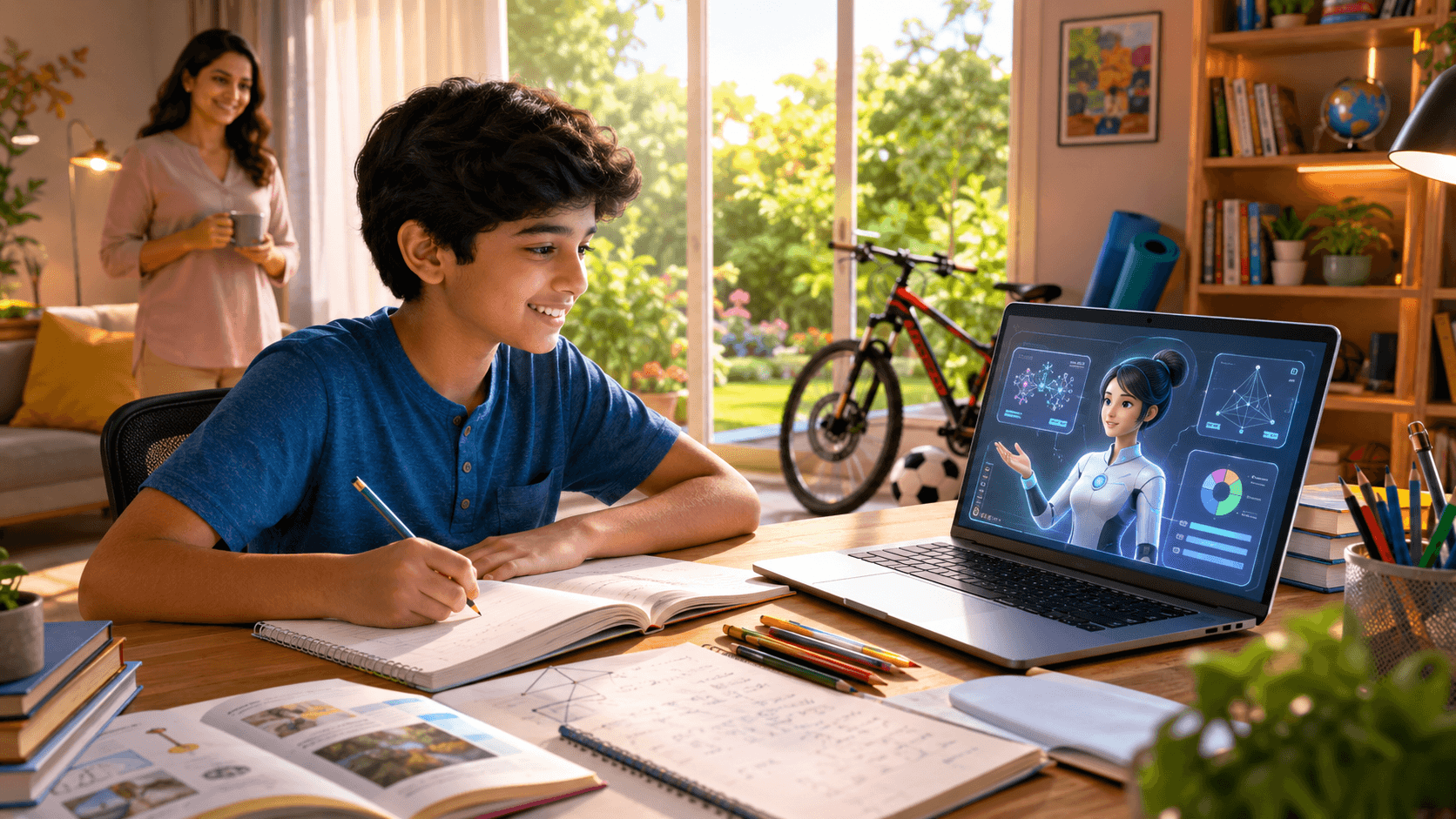
Balancing Screen Time with AI Learning: A Practical Guide for Parents and Students
Artificial intelligence (AI) is transforming education by making learning more personalized, interactive, and accessible. AI tutors can explain difficult concepts, create customized study plans, and provide instant feedback, helping students learn at their own pace. However, as AI becomes a regular part of education, one important question arises: How can students benefit from AI learning without spending too much time in front of a screen?
The answer lies in balance. Technology should support learning—not replace healthy habits, physical activity, or face-to-face interactions.
Why Screen Time Matters
Digital devices have become essential for education, communication, and entertainment. While educational screen time differs from recreational use, spending many hours continuously on a screen can contribute to:
Eye strain and headaches
Poor posture and neck pain
Reduced physical activity
Sleep disturbances, especially before bedtime
Difficulty maintaining focus after long study sessions
These effects are often linked not just to the total amount of screen time, but also to how the screen is used.
The Benefits of AI Learning
When used thoughtfully, AI tutors offer several advantages:
Personalized Learning
AI adapts lessons based on a student's strengths and weaknesses, allowing learners to spend more time on challenging topics and less on concepts they already understand.
Instant Feedback
Students receive immediate explanations and corrections instead of waiting for a teacher or tutor, helping them learn from mistakes more quickly.
Flexible Learning
AI tutors are available anytime, making it easier to study after school, revise before exams, or learn new skills independently.
Increased Confidence
Students who hesitate to ask questions in class may feel more comfortable asking an AI tutor for additional explanations until they fully understand a topic.
Signs of Too Much Screen Time
Parents and students should watch for signs that screen use may be becoming excessive, such as:
Difficulty concentrating
Irritability after using devices
Eye discomfort
Reduced interest in outdoor activities
Poor sleep quality
Constant switching between study apps and social media
Recognizing these signs early makes it easier to adjust study habits.
Tips for Balancing AI Learning and Healthy Habits
1. Set a Clear Study Schedule
Instead of studying continuously, divide learning into focused sessions.
For example:
30–45 minutes of AI-assisted learning
10-minute break
Continue with another study session if needed
Short breaks help maintain concentration and reduce eye strain.
2. Follow the 20-20-20 Rule
To reduce digital eye strain:
Every 20 minutes, look at something about 20 feet away for at least 20 seconds.
This simple habit helps relax the eye muscles during extended study sessions.
3. Combine Digital and Offline Learning
AI should be only one part of the learning process.
Students can:
Write notes by hand
Solve practice problems on paper
Read printed books
Create mind maps
Discuss concepts with family or classmates
Offline activities reinforce understanding while reducing screen exposure.
4. Encourage Physical Activity
After completing AI-based lessons, students should move their bodies.
Activities might include:
Walking
Cycling
Stretching
Playing outdoor sports
Yoga
Even 20–30 minutes of daily physical activity supports both physical health and learning.
5. Avoid Multitasking
Many students keep multiple tabs open while studying, switching between AI tools, videos, games, and social media.
Instead:
Keep only necessary learning resources open.
Turn off notifications during study sessions.
Focus on one task at a time.
Focused learning is more effective than long periods of distracted screen use.
6. Create Screen-Free Times
Designate certain parts of the day for activities without digital devices.
Examples include:
During meals
One hour before bedtime
Family time
Outdoor activities
These habits help maintain healthy routines and improve sleep quality.
7. Parents Should Stay Involved
Parents don't need to monitor every minute, but staying engaged can make AI learning more effective.
They can:
Ask what the student learned.
Review progress together.
Help set realistic goals.
Encourage breaks.
Celebrate improvements.
Supportive involvement often increases motivation and accountability.
Quality Matters More Than Quantity
Not all screen time is equal.
An hour spent solving math problems, learning a language, or practicing science concepts is very different from an hour of passive scrolling on social media.
The goal should be meaningful educational use, balanced with offline activities, rather than simply counting total screen hours.
Building Healthy Digital Learning Habits
Students can develop lifelong learning habits by following a few simple principles:
Use AI to understand concepts, not just find answers.
Take regular breaks.
Practice what you've learned offline.
Stay physically active.
Get enough sleep.
Ask teachers or parents for help when needed.
Balance technology with hobbies, sports, and social interaction.
The Future of AI Learning
AI tutors will continue to become more interactive, personalized, and accessible. They can make education more flexible and help learners of all ages build new skills. However, the most effective learning happens when technology is combined with healthy routines, critical thinking, and real-world experiences.
Rather than replacing traditional study methods, AI should complement them. A balanced approach allows students to enjoy the advantages of AI-powered education while protecting their physical and mental well-being.
Conclusion
AI learning has the potential to make education more engaging, personalized, and efficient. Yet success depends on how students use these tools. By combining AI-assisted study with regular breaks, physical activity, offline practice, and healthy daily habits, learners can maximize educational benefits while maintaining overall well-being.
Technology is a powerful educational partner—but balance is the key to making it truly effective.