
How AI Tutors Understand Student Learning Patterns
How AI Tutors Understand Student Learning Patterns: The Future of Personalized Education Introduction Every student learns differently. Some grasp concepts quic
Aalgorix World Academy
How AI Tutors Understand Student Learning Patterns: The Future of Personalized Education
Introduction
Every student learns differently. Some grasp concepts quickly through visuals, while others prefer detailed explanations, practical examples, or repeated practice. Traditional classrooms often struggle to accommodate these individual learning styles because one teacher must manage many students simultaneously.
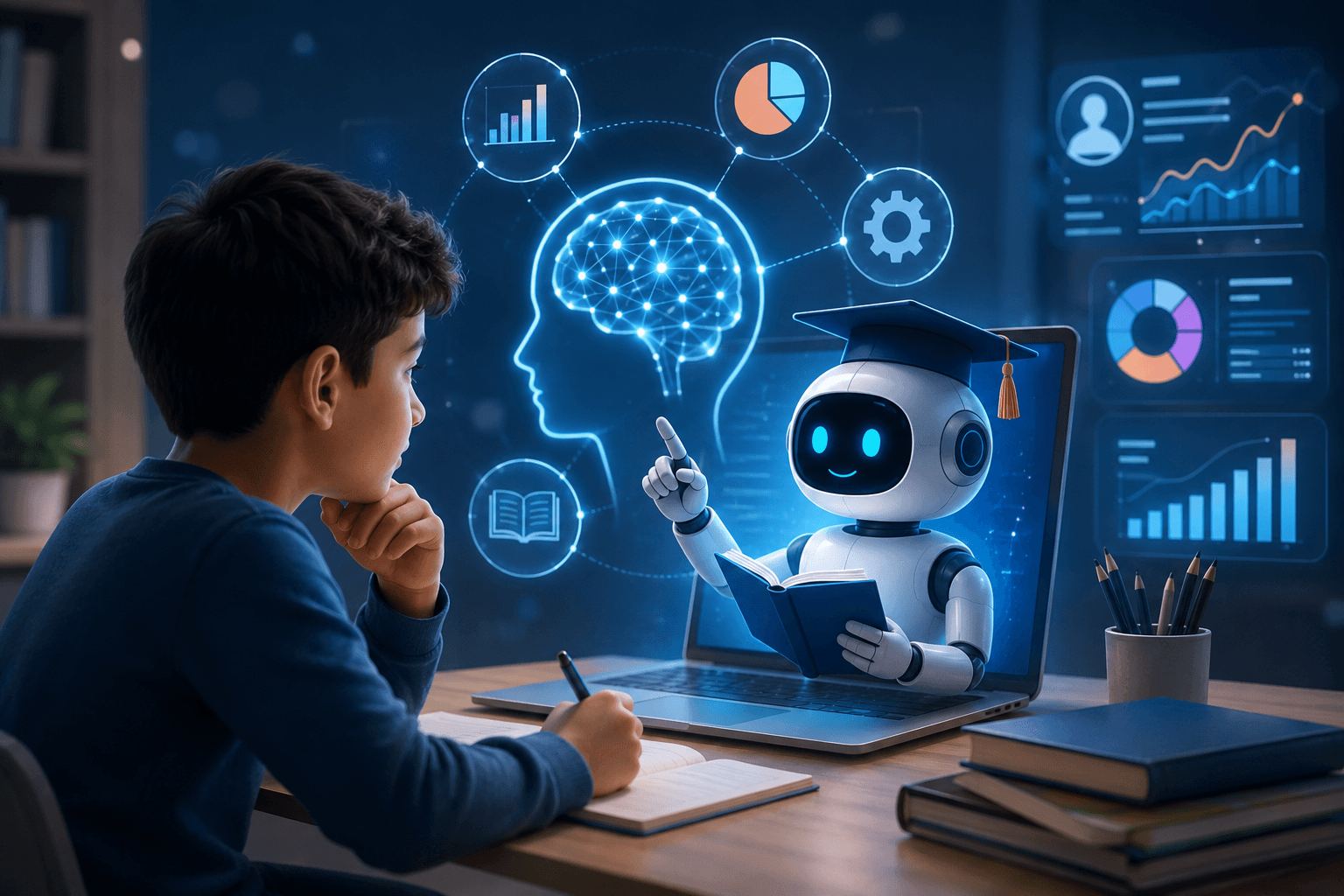
Artificial Intelligence is changing this approach. Modern AI Tutors don't simply answer questions—they continuously analyze how students learn, identify strengths and weaknesses, and adapt their teaching methods accordingly. This creates a highly personalized learning experience that helps every student reach their full potential.
In this article, we'll explore how AI Tutors understand student learning patterns and why they are becoming an essential part of modern education.
What Are Student Learning Patterns?
Learning patterns refer to the unique ways students absorb, process, and retain information. These patterns include:
Learning speed
Preferred learning style
Topics they find difficult
Subjects they excel in
Frequency of revision
Problem-solving approach
Attention span
Quiz and assignment performance
Learning consistency
Understanding these patterns enables educators to provide targeted guidance rather than using the same teaching method for everyone.
How AI Tutors Analyze Learning Patterns
1. Tracking Learning Behavior
Every interaction provides valuable insights. AI Tutors monitor how students engage with lessons by analyzing:
Time spent on each topic
Number of questions asked
Completion rate of lessons
Revision frequency
Accuracy of answers
Response time during quizzes
Over time, these insights help build a detailed learning profile for each student.
2. Identifying Strengths and Weaknesses
Instead of evaluating only final exam scores, AI Tutors continuously assess performance throughout the learning journey.
For example:
A student consistently performs well in Algebra but struggles with Geometry.
Another learner understands theory but finds numerical problems challenging.
The AI detects these patterns early and recommends additional practice before the student falls behind.
3. Adapting Teaching Style
One of the biggest advantages of AI Tutors is their ability to personalize explanations.
If a student doesn't understand a concept, the AI can:
Simplify the explanation
Provide real-life examples
Use diagrams or visual descriptions
Break complex topics into smaller lessons
Recommend practice exercises
This adaptive teaching approach keeps students engaged and improves comprehension.
4. Predicting Learning Challenges
Advanced AI systems use historical learning data to identify students who may need additional support.
For instance, if a learner repeatedly struggles with foundational concepts, the AI can recommend revision before introducing more advanced topics.
This proactive approach helps prevent learning gaps and improves long-term academic success.
Personalized Learning Recommendations
AI Tutors continuously refine recommendations based on each student's progress.
Examples include:
Suggested revision topics
Personalized quizzes
Practice assignments
Recommended study schedule
Additional reading materials
Interactive exercises
Mock tests before examinations
As students improve, the AI automatically updates these recommendations to match their evolving needs.
Benefits for Students
Learn at Your Own Pace
Students can revisit difficult topics as many times as needed without feeling pressured.
Instant Feedback
Instead of waiting for assignments to be graded, learners receive immediate explanations and corrections.
Increased Confidence
Students gain confidence by mastering concepts step by step through personalized guidance.
Better Academic Performance
Continuous feedback and adaptive learning help improve understanding, retention, and exam performance.
Reduced Stress
Knowing exactly what to study and where to focus reduces anxiety and makes learning more manageable.
Benefits for Teachers
AI Tutors are designed to support educators, not replace them.
Teachers can:
Monitor student progress through dashboards
Identify struggling learners early
Reduce time spent on repetitive questions
Personalize classroom instruction
Focus on mentoring and critical thinking
Use data-driven insights to improve teaching strategies
By automating routine support, AI allows teachers to dedicate more time to meaningful student engagement.
Benefits for Educational Institutions
Schools, colleges, and universities can use AI-powered learning analytics to:
Improve student engagement
Increase course completion rates
Reduce dropout rates
Enhance academic performance
Support large numbers of students efficiently
Deliver personalized education at scale
These insights help institutions make informed decisions about curriculum, student support, and resource allocation.
Privacy and Responsible AI
Student data must be handled responsibly. A trustworthy AI Tutor should:
Protect student information with strong encryption
Comply with data privacy regulations
Store data securely
Provide transparent learning analytics
Allow institutions to control access to sensitive information
Responsible AI builds trust among students, parents, and educators.
The Future of AI Tutors
As artificial intelligence continues to evolve, AI Tutors will become even more intelligent and interactive. Future capabilities may include:
Voice-based tutoring in multiple languages
AI-powered virtual teachers and digital avatars
Real-time emotion recognition for adaptive support
Augmented Reality (AR) and Virtual Reality (VR) learning experiences
Predictive academic coaching
Career guidance based on learning interests and performance
These innovations will make education more engaging, inclusive, and personalized than ever before.
Conclusion
Understanding student learning patterns is one of the greatest strengths of AI Tutors. By analyzing learning behavior, identifying strengths and weaknesses, and adapting instruction in real time, AI creates a personalized educational experience that benefits students, teachers, and institutions alike.
Rather than replacing educators, AI Tutors act as intelligent learning companions—providing 24/7 support, personalized guidance, and actionable insights that help every learner succeed.
As education becomes increasingly digital, AI-powered personalized learning will play a central role in shaping the classrooms of tomorrow.
Frequently Asked Questions (FAQs)
1. What is an AI Tutor? An AI Tutor is an intelligent learning assistant that provides personalized instruction, answers questions, tracks progress, and adapts lessons based on each student's learning behavior.
2. Can AI Tutors replace teachers? No. AI Tutors are designed to complement teachers by handling routine support while educators focus on mentorship, creativity, and critical thinking.
3. How do AI Tutors personalize learning? They analyze learning patterns, quiz results, study habits, and performance data to recommend customized lessons, practice exercises, and revision plans.
4. Are AI Tutors suitable for schools and universities? Yes. AI Tutors can support students across K–12, higher education, and professional training with scalable, personalized learning experiences.
5. Are AI Tutors safe for students? Reputable AI Tutor platforms use secure data handling practices, privacy controls, and institutional safeguards to protect student information.