
How to Balance Academics and Life Skills Through Homeschooling
Education is not just about scoring high marks in exams. In today's rapidly changing world, children need a combination of academic knowledge and practical life
Aalgorix World Academy
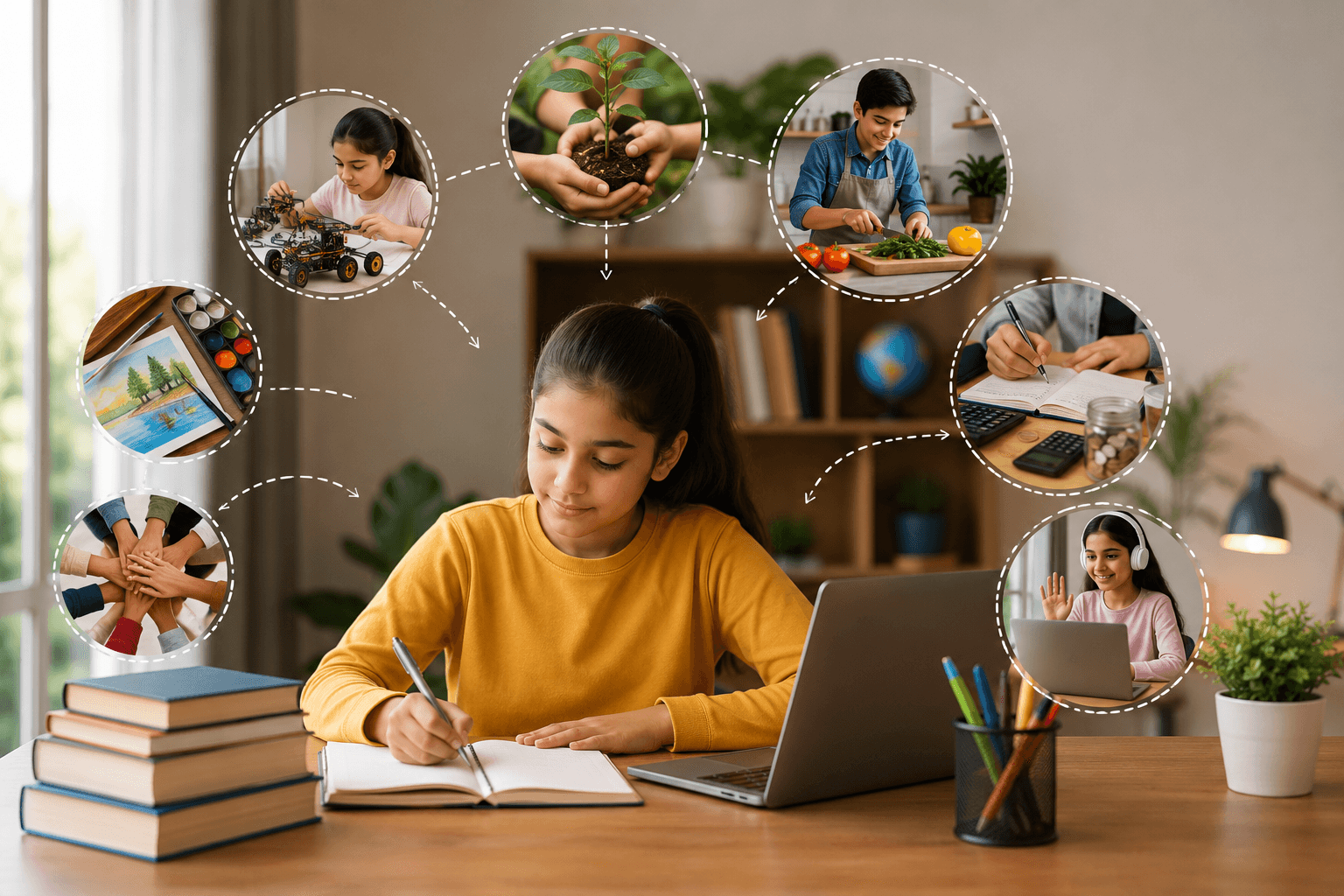
Education is not just about scoring high marks in exams. In today's rapidly changing world, children need a combination of academic knowledge and practical life skills to thrive. While traditional schooling often focuses heavily on textbooks and examinations, homeschooling offers a unique opportunity to create a balanced learning experience that develops both intellectual and real-world capabilities.
Homeschooling allows parents to customize learning based on a child's interests, strengths, and future aspirations. This flexibility makes it easier to integrate essential life skills alongside core academic subjects, helping children become confident, independent, and future-ready individuals.
Why Both Academics and Life Skills Matter
Academic learning provides the foundation for understanding mathematics, science, languages, and social studies. These subjects build critical thinking, problem-solving abilities, and subject knowledge.
Life skills, on the other hand, teach children how to navigate the real world. Skills such as communication, decision-making, financial literacy, time management, teamwork, emotional intelligence, and adaptability are equally important for long-term success.
The most successful individuals combine strong academic knowledge with practical life skills that help them handle challenges, collaborate with others, and continuously learn throughout their lives.
The Advantage of Homeschooling
One of the greatest strengths of homeschooling is flexibility. Parents are not restricted by rigid school schedules and can design a learning plan that balances academics with real-life experiences.
Instead of separating learning into different compartments, homeschooling enables children to learn through projects, daily activities, community engagement, and hands-on experiences.
For example, a lesson on budgeting can teach mathematics, financial literacy, and decision-making at the same time. A gardening project can incorporate biology, environmental science, responsibility, and patience.
Practical Ways to Balance Academics and Life Skills
1. Create a Flexible Learning Schedule
A balanced homeschooling schedule should include time for both academic subjects and practical activities.
A typical day might include:
Mathematics and Science in the morning
Reading and Writing in the afternoon
Life skills activities such as cooking, gardening, coding, or budgeting later in the day
This approach prevents burnout while keeping learning engaging and meaningful.
2. Use Project-Based Learning
Projects encourage children to apply academic concepts in real-world situations.
Examples include:
Starting a small business project
Creating a science experiment
Designing a website
Developing a community service initiative
These activities teach research, planning, communication, creativity, and leadership while reinforcing academic knowledge.
3. Teach Financial Literacy Early
Understanding money is a critical life skill that many adults wish they had learned earlier.
Homeschooling provides opportunities to teach:
Budgeting
Saving and investing
Entrepreneurship
Responsible spending
Children can learn these concepts through family budgeting exercises, mock businesses, and real-world financial discussions.
4. Encourage Problem-Solving and Critical Thinking
Rather than simply memorizing information, encourage children to ask questions, explore solutions, and think independently.
Activities such as debates, puzzles, coding projects, and real-world case studies help develop analytical thinking and decision-making abilities.
5. Develop Communication Skills
Strong communication skills are essential in every career and relationship.
Children can improve communication through:
Public speaking
Storytelling
Presentations
Group discussions
Collaborative projects
These experiences build confidence and prepare children for future leadership roles.
6. Integrate Technology and AI Learning
Technology is shaping every industry. Homeschooled students should learn how to use digital tools responsibly and effectively.
Introduce:
Coding
Artificial Intelligence basics
Digital literacy
Online research skills
Content creation
These future-focused skills complement traditional academics and prepare students for emerging careers.
7. Foster Independence and Responsibility
Homeschooling naturally encourages children to take ownership of their learning.
Assign responsibilities such as:
Managing daily schedules
Setting goals
Completing projects independently
Tracking progress
These habits help children develop self-discipline and accountability.
Real-World Learning Opportunities
Some of the best life lessons happen outside textbooks.
Parents can incorporate:
Volunteer work
Field trips
Internships
Community projects
Entrepreneurial activities
Family business involvement
These experiences expose children to real-world challenges and help them connect classroom concepts with practical applications.
Preparing Children for the Future
The future workplace will value creativity, adaptability, emotional intelligence, collaboration, and lifelong learning as much as academic qualifications.
Homeschooling offers a powerful platform to nurture these qualities by combining rigorous academics with meaningful life experiences. Children learn not only what to think but how to think, adapt, and succeed in a rapidly evolving world.
Conclusion
Balancing academics and life skills is one of the greatest advantages of homeschooling. By combining personalized learning with practical experiences, parents can help children develop the knowledge, confidence, and capabilities needed for lifelong success.
At Aalgorix World Academy, we believe education should go beyond textbooks. Our AI-powered homeschooling approach helps students master academic excellence while developing the future-ready skills required to thrive in the 21st century.