
Multilingual AI Tutors: Breaking Language Barriers in Education
Multilingual AI Tutors: Breaking Language Barriers in Education Introduction Education should never be limited by the language a student speaks. Yet millions of
Aalgorix World Academy
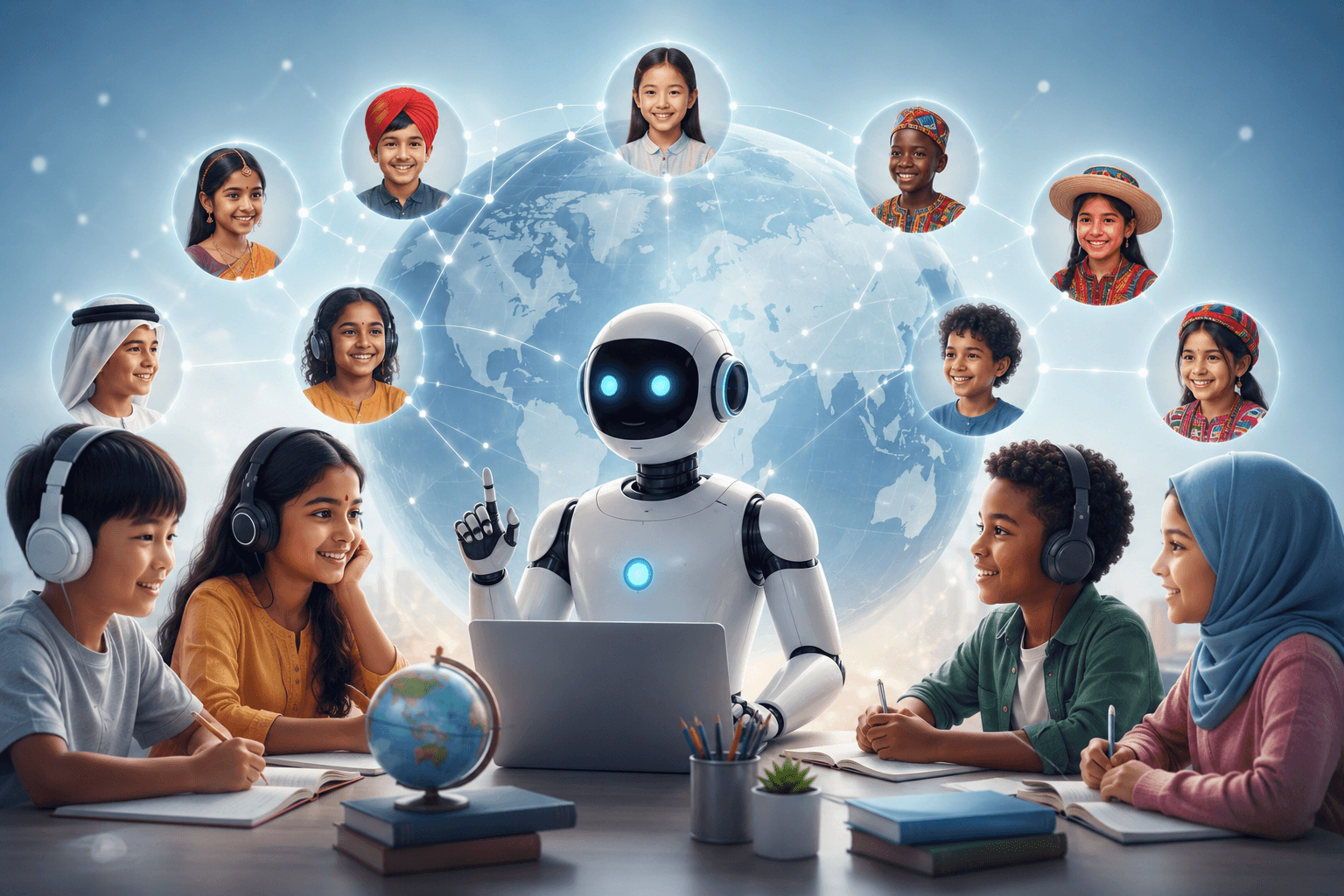
Multilingual AI Tutors: Breaking Language Barriers in Education
Introduction
Education should never be limited by the language a student speaks. Yet millions of learners around the world struggle to understand lessons because they are taught in a language that is not their strongest. This language gap often leads to lower confidence, reduced participation, and weaker academic performance.
Artificial Intelligence is changing this reality. Multilingual AI Tutors are making quality education more accessible by enabling students to learn in the language they understand best while maintaining the same curriculum and academic standards. Instead of forcing students to adapt to one language, AI adapts to the learner.
What Is a Multilingual AI Tutor?
A multilingual AI Tutor is an intelligent learning assistant capable of communicating, teaching, and answering questions in multiple languages. Unlike traditional translation tools, these AI tutors understand educational context and can explain complex concepts in a way that matches the student's learning level.
For example, a student can:
Ask a mathematics question in Hindi.
Receive a detailed explanation in Hindi.
Switch to English for technical terminology.
Continue the same conversation without losing context.
This creates a seamless and personalized learning experience.
Why Language Should Never Be a Barrier
Every student deserves equal access to knowledge, regardless of the language they speak at home. However, many educational institutions still rely primarily on one teaching language, making it difficult for learners from diverse linguistic backgrounds.
Common challenges include:
Difficulty understanding classroom lectures.
Limited participation due to lack of confidence.
Poor comprehension of technical subjects.
Dependence on external coaching or translators.
Reduced academic performance despite strong potential.
Multilingual AI Tutors address these challenges by providing instant, personalized support in the learner's preferred language.
Key Benefits of Multilingual AI Tutors
1. Personalized Learning in Native Languages
Students learn more effectively when concepts are explained in a familiar language. AI Tutors adjust explanations based on individual understanding rather than offering one-size-fits-all responses.
2. 24/7 Learning Support
Questions don't always arise during school hours. AI Tutors are available around the clock, allowing students to study whenever they need assistance.
3. Improved Concept Clarity
Subjects such as Mathematics, Science, Engineering, and Programming often contain complex terminology. AI Tutors can explain these concepts using simpler language before introducing technical vocabulary.
4. Increased Student Confidence
Many learners hesitate to ask questions in class because they fear making mistakes in another language. AI Tutors create a judgment-free environment where students can ask unlimited questions.
5. Better Learning Outcomes
Students who fully understand concepts rather than memorizing answers tend to perform better in examinations and develop stronger critical thinking skills.
Real-World Applications
Multilingual AI Tutors are transforming education across different learning environments.
Schools
Students receive personalized support after classroom sessions, improving homework completion and concept retention.
Colleges and Universities
AI Tutors help learners understand technical subjects, prepare for exams, and clarify complex academic topics in multiple languages.
Online Learning Platforms
Educational platforms can serve learners from different regions without creating separate content for every language.
Corporate Learning
Organizations use multilingual AI Tutors to train employees across global offices while ensuring consistent knowledge delivery.
Essential Features of a Modern Multilingual AI Tutor
An effective AI Tutor should provide:
Support for multiple regional and international languages.
Voice and text-based interactions.
Personalized learning recommendations.
Curriculum-aligned responses.
Progress tracking and performance analytics.
Secure institutional knowledge base.
Real-time doubt solving.
Interactive quizzes and assessments.
Cross-device accessibility.
These capabilities create a learning experience that is engaging, scalable, and accessible.
The Role of AI in Inclusive Education
Inclusive education means ensuring that every learner has equal opportunities to succeed. Language diversity should be viewed as a strength rather than a challenge.
By providing multilingual assistance, AI Tutors help educational institutions:
Reach students from diverse linguistic backgrounds.
Improve engagement and retention.
Enhance academic performance.
Reduce dependency on additional language support.
Promote equal access to quality education.
This approach makes classrooms more inclusive and learning more effective for everyone.
Looking Ahead
As AI continues to evolve, multilingual tutors will become even more intelligent. Future capabilities may include real-time speech translation during live classes, AI-generated personalized learning paths, adaptive assessments, emotion-aware tutoring, and immersive learning through voice, augmented reality (AR), and virtual reality (VR).
These innovations will enable educational institutions to deliver truly personalized education at scale while preserving linguistic and cultural diversity.
Conclusion
Multilingual AI Tutors represent a significant step toward making education more accessible, inclusive, and effective. By breaking language barriers, they empower students to learn with confidence, understand concepts more deeply, and achieve better academic outcomes.
For schools, colleges, universities, and online learning platforms, adopting multilingual AI tutoring is more than a technological upgrade—it is an investment in equitable education and future-ready learning.
As education becomes increasingly digital, the ability to teach every learner in the language they understand best will be one of the defining characteristics of successful educational institutions.